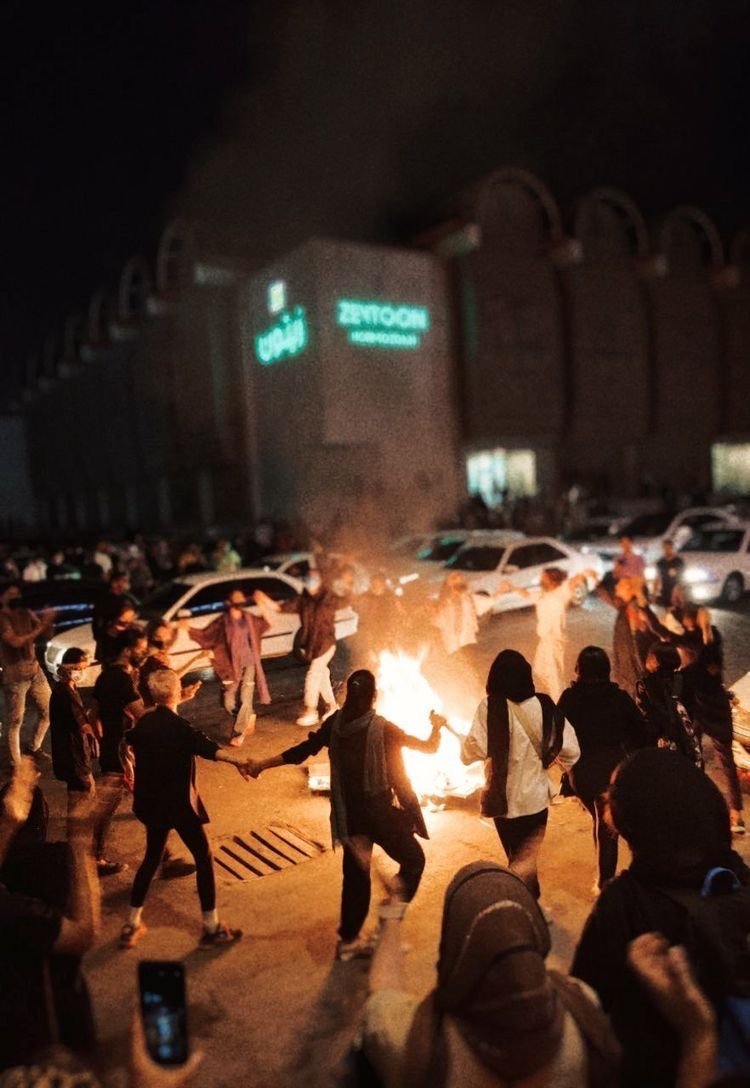
Lived Reality Over Ideology: Let Iranians Define Their Own Freedom
It’s been extremely disappointing to watch people debate Iran as if it were a case study instead of a country full of human beings. As if it were an abstract problem to be solved by ideology. As if the only relevant frameworks are the ones produced in Western universities, activist circles, or geopolitical think tanks. Meanwhile, the people who actually live there, who wake up under a dictatorship, who have buried their children, who have survived sanctions, repression, inflation, prison, and now war, are treated like background noise in conversations about their own fate.
Iranians inside Iran are paying the highest price. They pay it when they resist and are beaten, arrested, tortured, or killed. They pay it when they stay silent and slowly suffocate under a regime that controls their bodies, their speech, their futures. And they pay it again when war becomes another battlefield layered on top of dictatorship. It is easy to chant about anti-imperialism or anti-war principles from the safety of Toronto, London, or New York. It is much harder to sit with the reality that for many Iranians, the regime itself has functioned as a form of ongoing war against its own people for decades.
Research on Iranian women in the diaspora underscores this reality. In Iranian Women in Diaspora, Bahar Biazar reflects on how dominant Western theories fail to capture the lived consciousness of Iranian women in the diaspora. She writes, “I soon realized that such a moment did not exist in the lives of these Iranian women… contradictions were always visible. There was never a time in their lives when they were not aware of the existence of oppression… their consciousness grew and was reaffirmed.” There was no sudden theoretical awakening. There was no abstract moral revelation. There was daily life under oppression. That is what shaped political consciousness. That is what shapes it still.
When a dictator dies or when the regime weakens, the reactions of Iranians will not fit neatly into Western progressive scripts. Some will feel grief for what instability might bring. Some will feel fear, relief, or joy. None of these emotions require permission from anyone outside that lived reality. And yet we are already seeing attempts to discipline those reactions, to tell Iranians what they are allowed to feel because it might disrupt the messaging of another movement.
Scholarship on diasporic engagement with the Woman, Life, Freedom revolution similarly highlights that activism is rooted in lived memory and experience, not imported theory. One study notes that “collective memory and identity were articulated by the Iranian diaspora” in response to the protests, with hope emerging from deeply embodied histories rather than abstract frameworks (Minoo Kazemi, 2024). That language matters. It tells us that political reaction is not an intellectual exercise detached from context. It is grounded in memory, trauma, survival, and longing.
Yet we are already seeing attempts to discipline those reactions, to tell Iranians what they are allowed to feel because it might disrupt the messaging of another movement.
Solidarity does not mean conscripting Iranian pain into someone else’s cause. The Palestine movement has its own urgent, devastating struggle. The anti-war movement has legitimate critiques of Western militarism. But when those movements begin to police Iranian reactions, when they frame any expression of relief at the weakening of a brutal regime as betrayal, they replicate the very erasure they claim to oppose. They turn Iranian lives into symbols rather than realities.
The truth is that Iranians inside Iran have been living under a dictatorship that has criminalized dissent, executed protesters, and systematically crushed civil society. They have also endured the consequences of global power struggles, sanctions that devastate ordinary people, geopolitical maneuvering that treats their country like a chessboard. To reduce their responses to war or regime change to a tidy anti-imperialist formula is to ignore the material conditions shaping their choices. People who have spent decades fighting a regime are not obligated to mute their feelings to protect the moral coherence of Western activists.
For those of us in the diaspora, this is especially complicated. We carry memory, trauma, and distance all at once. We have watched family members navigate fear while we navigate privilege. We have protested in the streets knowing we will go home safely while our cousins cannot. Our politics are shaped by lived history, not by news cycles. When diaspora Iranians speak with relief at the weakening of a regime that has destroyed their families, that is not an endorsement of war. It is an expression of accumulated grief and rage. It is the language of people who have survived.
If progressive movements are serious about solidarity, then they must learn to examine and question their own thinking. They must resist the urge to filter every conflict through pre-existing talking points. They must stop reading the script of the oppressor, a regime that has long portrayed itself as the singular defender of Iranian sovereignty while brutalizing its own population, and then projecting that narrative onto the people it harms. Critiquing Western intervention is necessary, but doing so while centring the regime’s framing instead of the people’s lived experience is not solidarity. It is abstraction.
The best way to stand with Iranians right now is simple: Centre their voices. Amplify those inside the country who are risking everything to speak. Listen to the diversity of opinion among Iranians instead of flattening it into a single acceptable line. Recognize that those living under dictatorship and through war understand the stakes in ways outsiders cannot. Solidarity should be responsive, not prescriptive.
Iranians in Iran are paying with their lives, their safety, their futures. The least we can do is refuse to speak over them. Real solidarity does not co-opt their joy, silence their grief, or instrumentalize their suffering; It listens and follows.
True solidarity understands that lived reality, not ideological purity, must be the starting point for any ethical response to oppression, always.